Give Pisa Chance

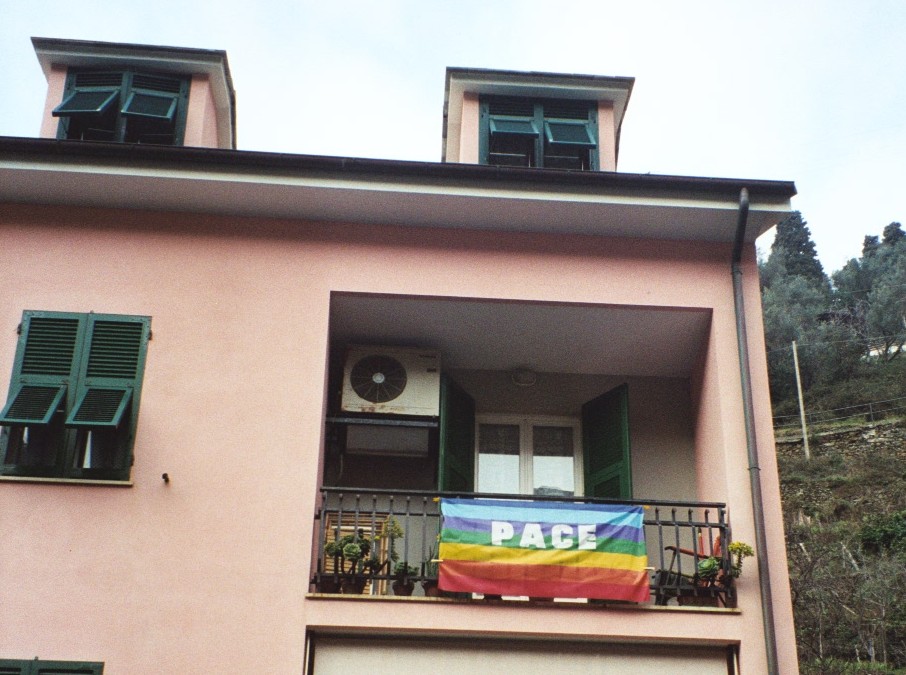
Give PACE a chance

Greeted by a crowd of anti-war demonstrators, waving (or draped in) rainbow pace flags, 50 yards from Pisa’s Centrale Station, we stood at a large tourist map in the open square to plot our next move.  What would we encounter past the demonstrators?  Would we discover more of the same, angry Italians hurling insults or rocks at us, the traveling war-mongering American pigs?  Should we opt for a taxi ride to the leaning tower, avoiding, for better or worse, what lay between here and there?

We interpreted the presence of a large tourist map as a symbol that it was safe to walk in downtown Pisa.  Armed with neither a guidebook nor a clue, we ventured forth on foot not knowing what to expect.  Our reward awaited.

In USA Today the previous week, we read of anti-war demonstrations in Pisa, and today was no different.  Despite our sympathies for anti-war causes, we spoke Spanish as we navigated our way past the demonstrators, attempting to hide our American-ness, which likely was impossible.

We had not heard anything positive about Pisa.  Prior to our visit, other travellers were willing to share their views.  They discouraged us, explaining that Pisa is only worth an hour’s visit, just long enough for a photo opportunity—you know the one—“look, mom, I’m holding up the Leaning Tower”.

Three weeks later, long after our return, I read an article which added perspective to our friends’ comments.  The Leaning Tower of Pisa is the classic bus tour stopover:  step out, take a photo and a one-hour tour of the cathedral.  Then walk across the Duomo to the merchants’ stalls lining the street, their cubicles stocked with leaning mugs and Leaning tower candlesticks, little statues of David (for those who missed the souvenir shops in Florence, I must assume), and scads of Pinnochios in all shapes and sizes.  This is the Pisa the tourist experiences:  sixty minutes, twenty photos, and fifty Euros of knickknacks which will be uncovered in their estate sales.  It has all come together;  this is why people do not enjoy Pisa.  They look, but they do not experience.
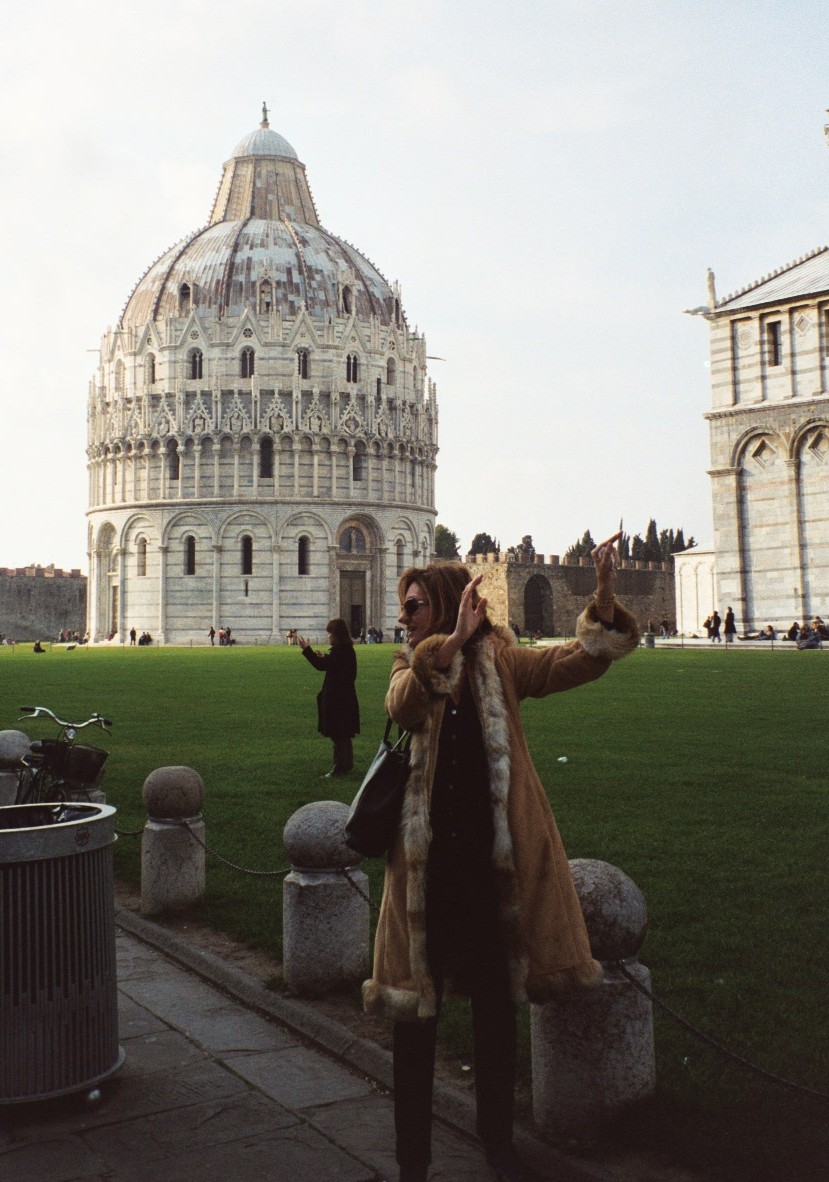
A stranger holding up the Leaning Tower for a photo

We arrived at the train station and checked our luggage, leaving us free to wander at leisure.  Fresh from a visit to the Italian coast, city life was at once strange and welcoming.  Our walk meandered through a pedestrian street, scarcely populated this afternoon, save some teenagers, some tourists, and a dozen police officers, which added to our uneasiness.  Most of the stores, from pharmacies to bookstores and clothing shops closed in the mid afternoon, as they were elsewhere in Italy.  The street life was concentrated in cafes, which overflowed with people enjoying the sunny afternoon with friends.  We stopped in a department store to find ourselves nearly alone, sharing the building with only bored clerks and a handful of shoppers.

In the streets people spoke Italian, instead of the myriad languages (primarily English) which we heard around the tourist sites.  From a café window, we watched young skaters sitting at the base of a statue, with only their fashions  to differentiate them from American youth.  When the stores opened, we wandered about, exploring bookstores and shops, debating European fashion and the price of blue jeans in Europe.

The streets changed names as we crossed rivers and bridges, stopping for photos and gelato.  We took care to stay on the beaten path, afraid of wandering around in a strange city in a time when Americans were not popular, down alleys spray painted with threats: “Yankee Go Home”.  Mapless, wandering along Renaissance streetplans, we wondered how they could have done such a great job of hiding a landmark as large as the Leaning Tower.  We turned a corner and there it stood (or leaned) a block away–as if we alone had discovered it.  This must be more memorable than capturing your first sighting from a bus window.  Perhaps it is because my legs were worn from the walk and I must comfort myself that my reward was greater than theirs.

I will attempt to describe the Leaning Tower to you, but my words are ill-matched to the wonder we felt.  I could write a dissertation on how difficult it is to capture the essence of a moment like this.  Dude, it’s way cool.  The Leaning Tower looks exactly like it does in the postcards, but it is the experience which is special.  It seems to lean more in real life; we wonder how this structure could have stood for 500 years without toppling.  From here, we walked up close to study the architectural details, the columns on each floor, the concrete reinforcements which helped to freeze the Tower in its near-erect state.  It is quite narrow, adding to the illusion of height, even though it is only 180-something feet high.   During our visit, the tip of the tower was encased in scaffolding, as if they were building a revolving restaurant.
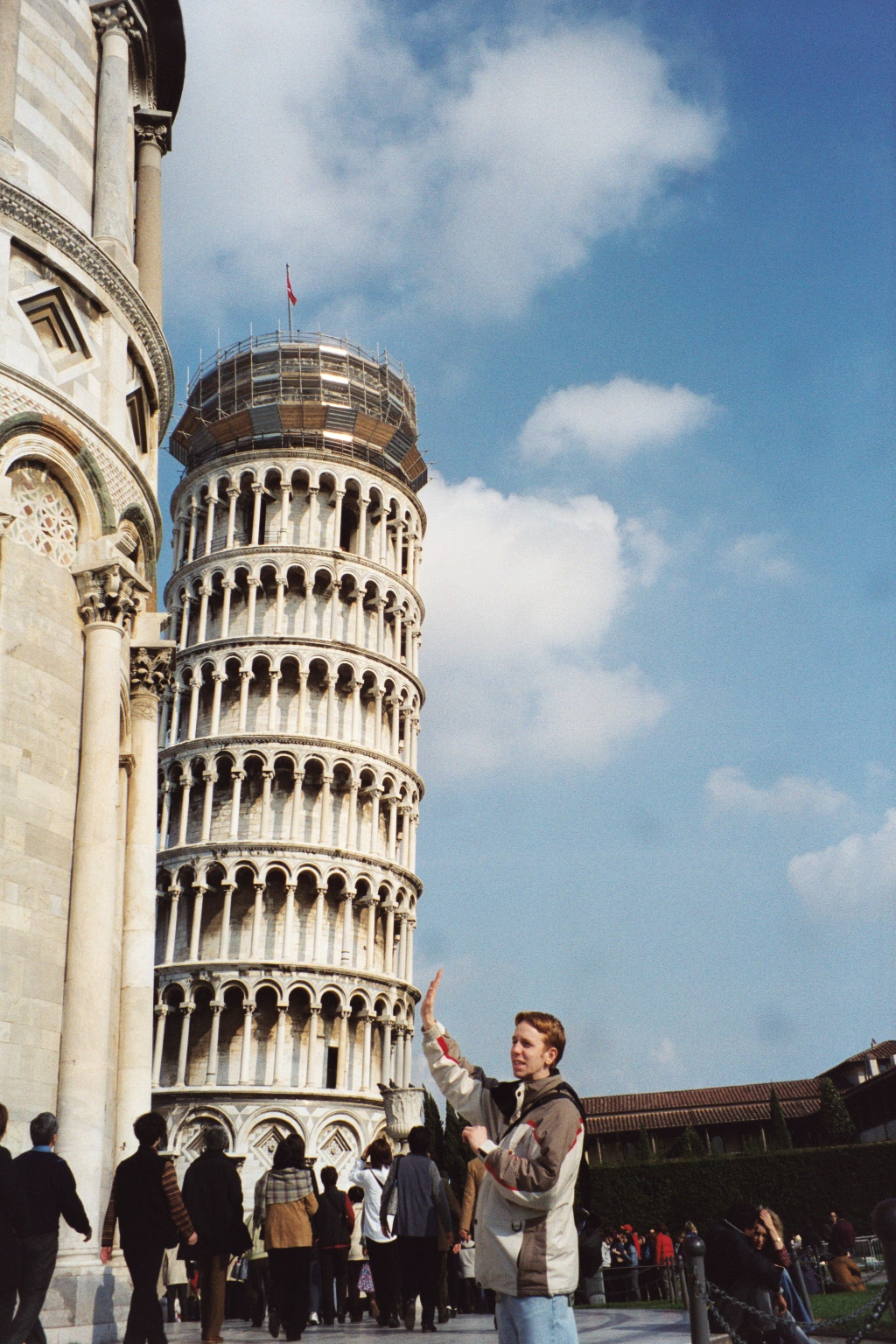
I would never do a post about Pisa without the tower. I am holding it up.

The duomo & baptistery sharing the Piazza del Duomo with the tower (aka campanile) were equally impressive architecturally, and I decided to read a travel guide once I am back home to learn more.

I have doubts that I will ever return to Pisa.  We live in such a big world with so many attractions, but I don’t regret my afternoon in Pisa.  My greatest happiness is not that I visited Pisa, but that I experienced it by foot instead of a bus tour.

Like Graceland, the Leaning Tower is something I am happy to have experienced once.  If it were closer I would visit again and again.

Posted in Uncategorized | Tagged , | Leave a comment

Searching for Meaning in New Orleans

With an outsider’s view, I can’t tell you what New Orleans is like. The hotels are open, the restaurants are open; and the French Quarter is open. There’s a Royal Caribbean cruise ship in port. The gamblers are filling Harrah’s and the Gordon Biersch Brewery across the street is stuffed for a Saturday mid-afternoon.

But something is missing. And maybe it’s only in my head. Because I know what happened, I don’t think I could ever have as much fun here as “before.” And everytime I walk into the convention center, I visualize the TV news stories of everything left behind after Katrina. I see the people screaming for help. I see the filth left behind, the bodies and the trash in the streets. This is the tragedy that should (or should not) be mentioned. The Convention Center is mysteriously empty. Maybe it is the time of year, maybe it has always been this way between large conventions, but it adds an eerie quality to the building.

The last time I was here was on New Years Eve Weekend for the Sugar Bowl, which matched Illinois and LSU, so the streets were packed with revelers in purple and gold. Perhaps that accentuates the polarity of my visits – one of the craziest times of year with one of the craziest. I can’t be sure, and I didn’t ask the questions. There is a certain self-guilt in asking questions about “before” and “after”.

We ate a phenomenal meal of fresh seafood atop a sweet potato croquette at Le Citron Bistro. On a Saturday night, there were only two tables occupied. Chef David Baird enjoyed a digestif of Grand Marnier with us at the bar. He opened 3 years ago, and the restaurant had been gathering momentum pre-Katrina (those words again). Of course, it hasn’t been the same since. It’s doubltful most tourists would want to leave the French Quarter, especialy to venture to this small restaurant created from an abandoned 197-year old cottage and situated next to an empty lot. The attention to detail here was delightful – with perfect service and a menu that changes every few days – based on whatever is fresh and whatever new dishes the chef invents. I wonder how many more stories there are like this.

The Times-Picayune reports that somewhere between 190,000 and 230,000 people are living in New Orleans, according to various estimates. Half the people are gone. They play ads on TV in Atlanta pleading for people to come back – to a city they probably associate as much with nightmares as they do with weddings an first loves and laughter. But rents here are high. They say nothing quite works; stoplights are out daily. Traffic is horrible, but no one can explain why.

With the population change has come a demographic change. The Hispanic population here has increased greatly. I even heard the airport announcements in Spanish. Many Hispanics have arrived for the high wages. They are a large segment of the rebuilding force. They play a role in not only how the physical city will look tomorrow, but how the population may look tomorrow.

They might love it just as much now, as my New Orleans friends would attest. There is some internal compass, a place in your heart for this city, which has inspired songs and movies. They say you either get it or you don’t. And if you get it you will never want to leave. And if you do leave, you always want to come back. They say you have to leave to come back, in the way you want your lover more after you leave them. The magnetism of this city is difficult for me to comprehend, as I am, and will always be, a foreigner.

But I can see it when I drive through the lower Garden District, or down Magazine Street with its boutiques and local restaurants. New Orleanians still create any excuse for a party; the government still closes for Mardi Gras. They still look forward to fresh crawfish season in the spring and a trip to the casino on payday.

Katrina is mentioned daily here. It is impossible to escape. Some breaking news is usually above the fold on the front page of the newspaper and scattered about the inside pages also. Where has the supposed rebuilding money gone? What is the master plan for the city? Where will the next influx of rebuilding money go? It seems like not many have received these government grants. The locals talk about where this money has gone, and why their friends haven’t seen any of it.

The boarded-up shop windows on Canal Street remind us of Katrina, as do the signs advertising Katrina-devastation bus tours to tourists – tours which are frequently sold out. Personally, I have seen enough on TV, and I’m not ready to see it in person. Not now, and probably not ever.

Being here and seeing signs of a Renaissance give me hope, but it almost feels like post-bomb Bali. The signs practically beg you to come. They plead with you to enjoy yourself, which makes it a little more awkward to do so. It is as if having fun is no longer a diversion, but a requirement. So much pressure can make it exhausting to live up to such expectations. I spent money. I drank (maybe a bit much). And that’s what New Orleans expects of me.

The last time I was here, I felt I never needed to come back. Been there. Done that. Drunk college students vomiting up hurricanes in public. The smell of decaying garbage bags of trash piled along the sidewalks waiting for pickup. Too much fried seafood. Service oh so very poor. But now I feel as if I could come back here, that the disaster has opened up a human side of the city. Only time will tell whether this great American renaissance will be realized, and if I’ll be back to see it. (originally written January 2006)

Photo was taken in London. Sorry, I didn’t have one from New Orleans.

By Matthew Stone
Travel to New Orleans, Louisiana

Posted in Destinations, Essence of Travel | Tagged , | Leave a comment